
Overview
This course provides intensive training to prepare and implement geographic information systems (GIS) and spatial statistics analyses for archaeologists working in cultural resource and/or heritage management. No prior GIS or programming experience is required. Using hands-on training for both beginner and advanced users, this course includes an optional bootcamp module to develop or refresh GIS skills to complete the course. This intensive, one-week training session condenses a mid-level spatial archaeology curriculum into five full days of lectures, and guided labs, from classic settlement pattern studies to LiDAR, 3D GIS, and GeoAI.
It is advised that participants who are new to ArcGIS or QGIS take advantage of the asynchronous bootcamp to get familiar with the nuances of these widely used software packages. During the 1-week intensive session, you will learn to collect, manage, and analyze spatial data in both ArcGIS and QGIS, applying exploratory as well as inferential spatial statistics that are most useful for archaeologists, from examination of intrasite variation to landscape-level feature detection, using machine learning and AI. Guided labs will use original datasets to contribute to original research along the Colorado Plateau (Arizona, USA) and the Pacific Coast.
During this intensive 5-day session, participants will explore a range of techniques most suitable for archaeological reporting and analysis. The course also addresses responsible practices, from protecting confidential site locations, working with Tribal and community data under FAIR and CARE principles, to recognizing the limits and practical advantages of contemporary GIS tools, as well as reporting regulations. This course is designed for heritage management and archaeology professionals and students who want to make their geographical spatial data speak.
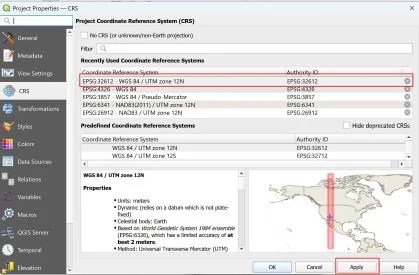
US AZ GIS Carousel Image #07
Generating GIS data
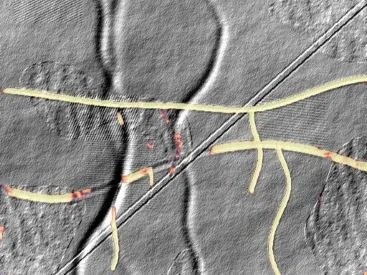
US AZ GIS Carousel Image #06
Predictive modeling of canals
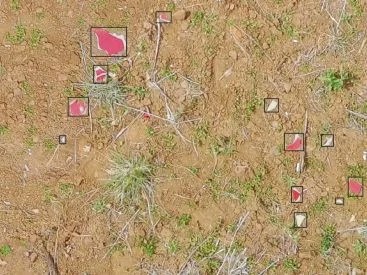
US AZ GIS Carousel Image #05
Maping artifact distribution
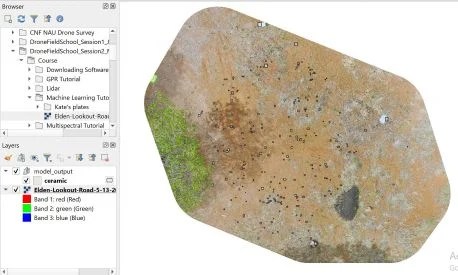
US AZ GIS Carousel Image #04
Machine learning image generator
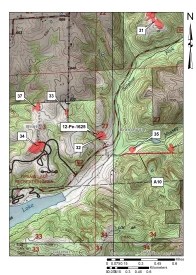
US AZ GIS Carousel Image #03
Locator map from survey area
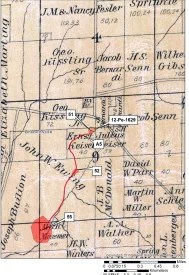
US AZ GIS Carousel Image #02
Locater map from old map
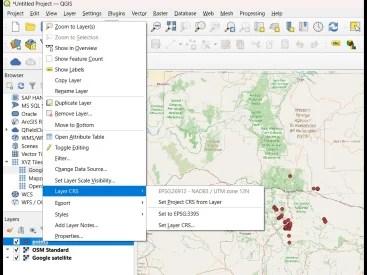
US AZ GIS Carousel Image #01
GIS mapping using GPS
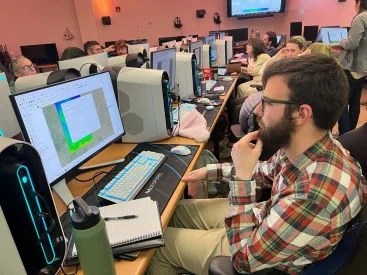
US AZ AI & LLM Carousel image #07
Student processing data
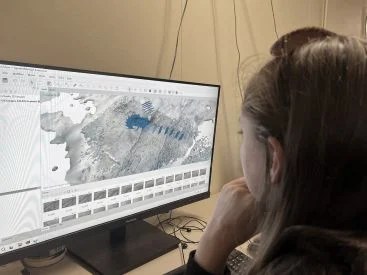
US AZ AI & LLM Carousel image #01
Assesing predictive ML modeling
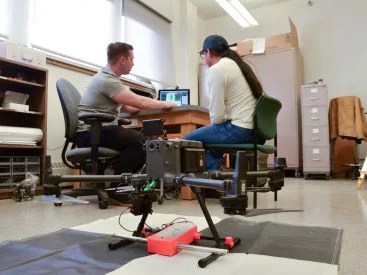
Carousel Image #10
Understding blue drone data collection
Instructor(s)
All field school directors are experts in their field and passionate about their work. To discuss the suitability of this program for your career goals – whether within or outside academia – you are invited to contact the directors directly. For a broader discussion which ARC program to choose, you are welcome to contact our staff directly – you can do that through our “Contact Us” page.

Testimonials & Program evaluation
Student Fees (Tuition)
What is Covered
- DEPOSIT IS PART OF TOTAL TUITION COST
- Costs of Instruction
- Cost of Academic Credit Units
- Cost of Software & Computer Time
- Liability & Accident Insurance
Read Before You Pay
- Application: You must apply online for this program – application is free
- Deposit: A $300 nonrefundable deposit (part of the total tuition cost) is required to secure a space in the program
- Credit Card Fee: Payments with credits cards incur 3% processing fee
- Late Fee: A $100 Late Fee will be added to the program costs if tuition is not paid in full by payment deadline
- Cancellation Policy: Carefully read our Cancellation Policy before committing to attending our programs
- Trip Cancellation Insurance: Trip cancellation insurance is not provided by ARC. Such policies have changed due to Covid 19. If you wish to purchase an insurance policy that covers pandemic contingencies, explore Cancel for Any Reason (CFAR) plans. Insuremytrip or Travel Guard are possible websites where you may explore different insurance policies.
Accommodations

This program provides no room and board.
Diet

This program provides no room and board.
Travel Information

Students will meet with project staff members on Monday morning, the first day of field school, at 8:30 am at the Digital Archaeology Laboratory, Northern Arizona University. The laboratory is located in Building #52, Bilby Research Center.
Visa Information

This is a domestic program, and no visa is needed for U.S. Citizens.
Non-US Citizens are asked to check the United States embassy website at their home country for specific visa requirements.
Meeting Point
| Date | Time | Location |
|---|---|---|
| Mon (1st day of field school) | 8:00am | Digital Archaeology Laboratory, Northern Arizona University |
If you missed your connection or your flight is delayed, please call, text or email project director(s) immediately. A local emergency cell phone number will be provided to all enrolled students.
Safety
Our primary mission is student education. Traveling and conducting field work involves risk and students interested in participating in any field schools must weigh whether the potential risk is worth the value of education earned. While risk is inherent in everything we do, we do not take risk lightly. We engage in intensive review of each field school location prior to approval and continue to monitor conditions on the ground to ensure a safe and wholesome education experience.
Students attending our international programs are covered by a comprehensive Health Insurance Policy that covers physical illness or injury, mental or chronic conditions and medical evacuation – if needed. This insurance policy has no deductibles and 100% of the costs are covered up to $250,000 (for more, see here). In addition, we provide Political & Natural Disaster Evacuation policy, which allows us to remove students from program location if conditions change.
Students attending our domestic programs (within the US) must have their own health insurance. Program directors are familiar with local authorities and if in need of evacuation, local emergency services and/or law enforcement will be notified and activated.
We have an explicit and robust Harassment & Discrimination Policy, outlined on our Health & Safety page. If students feel they cannot discuss personal safety issues with program staff, they are welcome to call the ARC emergency hotline and talk directly with an ARC staff member.
Call (+1 323 740-1805) or email (admin@anthroctr.org) if you have questions about the safety of any program.